

Low back pain is widespread in our society, and we treat it every day. Nearly everyone will suffer from lower back pain at some point. According to a recent study, lower back pain is the leading cause of disability in the United States. Low back pain is so common because of our:
- Sedentary lifestyle: people who spend a lot of time sitting and lying down are more prone to developing low back pain, as this position puts a lot of strain on the lower back muscles and joints.
- Poor posture: Poor posture, such as sitting with poor lumbar support, can lead to muscle imbalances and put excess strain on the lower back.
What Can Cause Low Back Pain?
Our muscles, joints, discs, and nerves contribute to low back pain in their unique way.
- Muscles: low back muscles help support the spine and assist with movement. Strains or sprains in these muscles can lead to low back pain.
- Discs: spinal discs act as shock absorbers and help cushion the vertebrae. When a disc becomes damaged or degenerated, it can herniate or bulge, putting pressure on nearby nerves.
- Joints: The joints in the lower back, called facet joints, can become strained or injured, leading to pain. Degenerative conditions such as osteoarthritis can also affect the low back joints and cause pain.
- Nerves: nerve compression or irritation leads to pain. This can be caused by various conditions, such as herniated discs or spinal stenosis, which is the narrowing of the spinal canal.
Low back pain can hinder your ability to work and exercise, not to mention make it difficult to perform everyday tasks, such as standing, walking, sitting, and lifting. Addressing the pain early on can help prevent it from escalating and potentially causing more long-term damage. Untreated, chronic low back pain can lead to health problems like depression, anxiety, incontinence, digestive disorders, infertility, and sleep disorders. Low back pain is common but not normal. Taking care of your pain is essential to reduce your risk of disability and improve your quality of life.
$79 Chiropractic or Decompression New Patient Special
Step 1 includes Initial Consultation, Health History Review, Health Goals Assessment, Comprehensive Spinal Exam, Orthopedic Testing, Digital X-Rays, Inflammation Scan, Muscle Scan, MRI Review (if available) & Decompression Trial (if indicated). Step 2 includes Test Results Review, X-Ray Review, Root Cause Analysis, Personalized Recommendations & Fast-Track Recovery Plan.
How Our Care Plan Works
1. “No One Has Ever Told Me That Before”
We want you to understand your condition. Most people have never heard that structure or neurology may be why they’re not improving. An educated patient is an empowered patient.
2. “I Can’t Believe I Feel This Good Already”
Getting our patients better as quickly as possible is what we do best. With our specific protocols, our patients often feel improvement in minutes, not weeks.
3. “I Never Knew Feeling Good Could Last This Long”
Once the underlying problem is corrected, the results are easy to maintain. We give you the home care playbook that helps you stay healthy, active and feeling your best for years to come.
How We Treat Lower Back Pain In Grand Rapids, MI
The specific treatment techniques we use may vary depending on the individual patient and the nature of their low back pain condition. Here are the techniques we use as part of our lower back pain treatment:
Comprehensive Consultation and Exam
We employ comprehensive consultations and examinations to obtain information about a patient’s condition and formulate a treatment plan. It often entails thoroughly evaluating the patient’s medical history, a physical exam, and possibly diagnostic procedures such as postural screenings and X-rays.
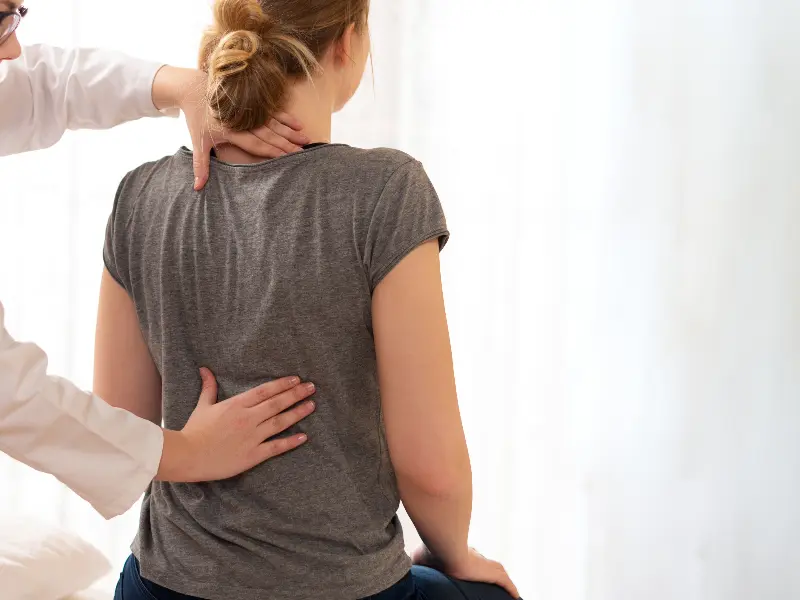
Specific Chiropractic Care in Grand Rapids, MI
Spinal misalignments interrupt nerve flow and affect proper muscle function. This can lead to pain, muscle tension and imbalance, and organ dysfunction. Spinal manipulation, which includes applying force to the spine to increase mobility and reduce pain, and spinal mobilization, which involves using gentle, low-force movements to the spine to enhance mobility and reduce pain, are two typical treatments we employ to treat lower back pain. Correcting these misalignments, also known as subluxations, will restore balance to the physical structure of the spine as well as the nervous system, which is responsible for controlling every aspect of our body.
Chiropractors are healthcare practitioners who diagnose and treat neuromuscular diseases, focusing on the spine. They use several treatments, including spinal adjustments, to reduce pain and improve nervous system function. Numerous individuals seek chiropractic care to alleviate back, neck, and other musculoskeletal problems.
Custom Therapeutic Exercise Plan
We create a therapeutic exercise program tailored to your unique needs and limits. A customized program can aid in strengthening the muscles that support the spine, enhancing flexibility and range of motion, and alleviating pain and discomfort. Exercises work with adjustments to stabilize proper spinal structure and help the body hold adjustments longer.

Spinal Decompression
Spinal decompression is a vital low back pain treatment. This procedure is frequently used to address herniated discs, degenerative disc disease, and spinal stenosis. Disc injuries put pressure on the adjacent nerves. By decompressing the spine, we can relieve pressure on the discs, relieve nerve irritation, and give the discs a chance to rehydrate and heal.
Deep Tissue Laser
Deep tissue laser is a non-invasive treatment that uses laser energy to speed up healing and reduce inflammation in the deep tissue layers of the body. We sometimes use this method to treat lower back pain and other musculoskeletal problems like arthritis, tendinitis, and plantar fasciitis.


Common Causes of Low Back Pain in Grand Rapids, MI
Bulged Lumbar Discs
When a bulging lumbar disc presses on spinal nerves, it can cause lower back pain. The lower back discs (lumbar spine) have a soft, spongy center and a harder, fibrous outer layer. A bulging disc indicates the soft center has pushed through a crack or tear in the outer layer. It can cause the disc to press against adjacent nerves, resulting in lower back pain, tingling, numbness, and muscle weakness, even in the legs.
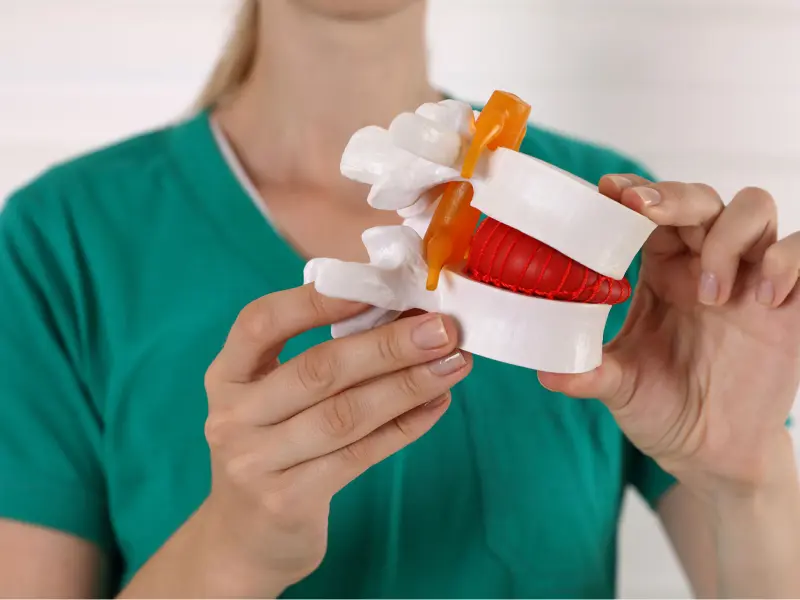
Herniated Lumbar Discs
When a bulged disc tears completely and the soft center herniates, it puts pressure on the nerves in the lower back, which can cause pain, numbness, and tingling in the lower back and legs. The severity of the pain can vary, depending on the size and location of the herniated disc and the amount of pressure it puts on the nerves.
Degenerative Disc Disease
Degenerative disc disease is when the discs in the spine begin to degenerate and break down. The discs have a soft, gel-like interior encircled by a fibrous outer covering. They provide cushion between the spine’s bones, allowing the spine to move and bend while providing support. When the discs are damaged or degrade, they can no longer provide appropriate cushioning and support, resulting in lower back pain.
Spinal Stenosis
Spinal stenosis is the narrowing of the spinal canal, which houses the spinal cord and nerve roots. This constriction can pressure the spinal cord and nerve roots, causing pain and other symptoms.
Muscle Strain
When the lower back muscles are stressed, they can become inflamed and sore. Depending on the intensity of the strain, this can result in mild to severe lower back pain. The discomfort could be acute and restricted to the damaged muscle or more diffuse and spread across the lower back.
Sacroiliac Joint Dysfunction (SI Joint Pain)
The SI joint connects the sacrum (the triangular bone at the base of the spine) to the iliac bones (hip bone). SI joint dysfunction can cause low back pain by transmitting tension between the upper and lower extremities. Inflammation, muscle imbalances, and anatomical abnormalities cause SI joint dysfunction.
Facet Joint Dysfunction
Facet joint dysfunction occurs when the facet joints, which are tiny joints positioned between the vertebrae in the spine, become inflamed or injured. It can result in several lower back issues, such as pain, stiffness, and decreased range of motion.
Subluxation
A misalignment or partial dislocation of a vertebra in the spine is referred to as a subluxation. This misalignment interrupts normal nerve flow and alters proper spinal structure. Interrupted nerve flow scrambles the messages transmitted between the brain and body, causing joint, muscle, and organ dysfunction.
Check Out Our Location Near You
4172 Lake Michigan Dr, Grand Rapids, MI 49534
Frequently Asked Questions
When Should I Be Worried About Lower Back Pain?
Low back discomfort is your body’s warning system that something is amiss. Pain is usually the last thing to occur and the first thing to leave; therefore, we want to deal with it as soon as it appears to avoid becoming a chronic condition.
What Can I Do to Relieve My Lower Back Pain?
Chiropractic care, spinal adjustments, strengthening and stabilizing exercises, spinal decompression, and deep tissue laser are some of the best ways to reduce pain and correct the underlying problem to prevent relapse. The best thing to do is contact us so we can assess the source of your pain and provide more precise treatment choices.
How Do I Know if My Back Pain Is Serious?
All pain deserves to be assessed by a medical provider. However, some general guidelines might help you assess whether your back pain is serious:
- Pain has lasted more than a few days
- Standing or walking difficulties
- Difficulties urinating or passing stools
- Numbness, tingling, or radiating pain in the legs
- Pain that worsens when you lie down
- A high fever, nausea, or vomiting in addition to pain
- Unanticipated weight loss
- A cancer history
What Causes Lower Back Pain?
Some of the most common causes of lower back pain include muscular strains or sprains, herniated discs, spinal stenosis, facet joint dysfunction, and degenerative disc disease, among many others. It is always a good idea to consult a healthcare provider for an accurate diagnosis and appropriate treatment.
How Should I Sleep With Lower Back Pain?
You can try the following at-home remedies to help relieve lower back pain while sleeping:
- Use a supportive mattress: A firm mattress can help relieve lower back pain.
- Sleeping on your side with a pillow between your knees can help keep your spine in a neutral position and reduce strain on your lower back.
- Sleeping on your back with a pillow under your knees can also help relieve pressure on your lower back.
- Avoid sleeping on your stomach as it strains your lower back and may aggravate your pain.
- Stretching your back and hips before bed will help release tight muscles and improve your sleep posture.
How Do I Tell if Lower Back Pain Is Muscle or Disc-Related?
With a thorough examination and diagnostic procedures, we can determine the exact cause of your low back pain and design an effective treatment plan.
Lower back pain caused by muscle feels achy and sore and can be improved with movement, ice and heat, or massage. Lower back pain caused by a disc will feel sharp and stabbing and be made worse by movement.
Can a Chiropractor Help With Lower Back Pain?
Yes! We are experts in detecting and treating neuromuscular problems, particularly spinal manipulation and adjustment. Our natural, holistic approach to optimizing the nervous system allows the body to heal faster and function better.
$79 Chiropractic or Decompression New Patient Special
Step 1 includes Initial Consultation, Health History Review, Health Goals Assessment, Comprehensive Spinal Exam, Orthopedic Testing, Digital X-Rays, Inflammation Scan, Muscle Scan, MRI Review (if available) & Decompression Trial (if indicated). Step 2 includes Test Results Review, X-Ray Review, Root Cause Analysis, Personalized Recommendations & Fast-Track Recovery Plan.